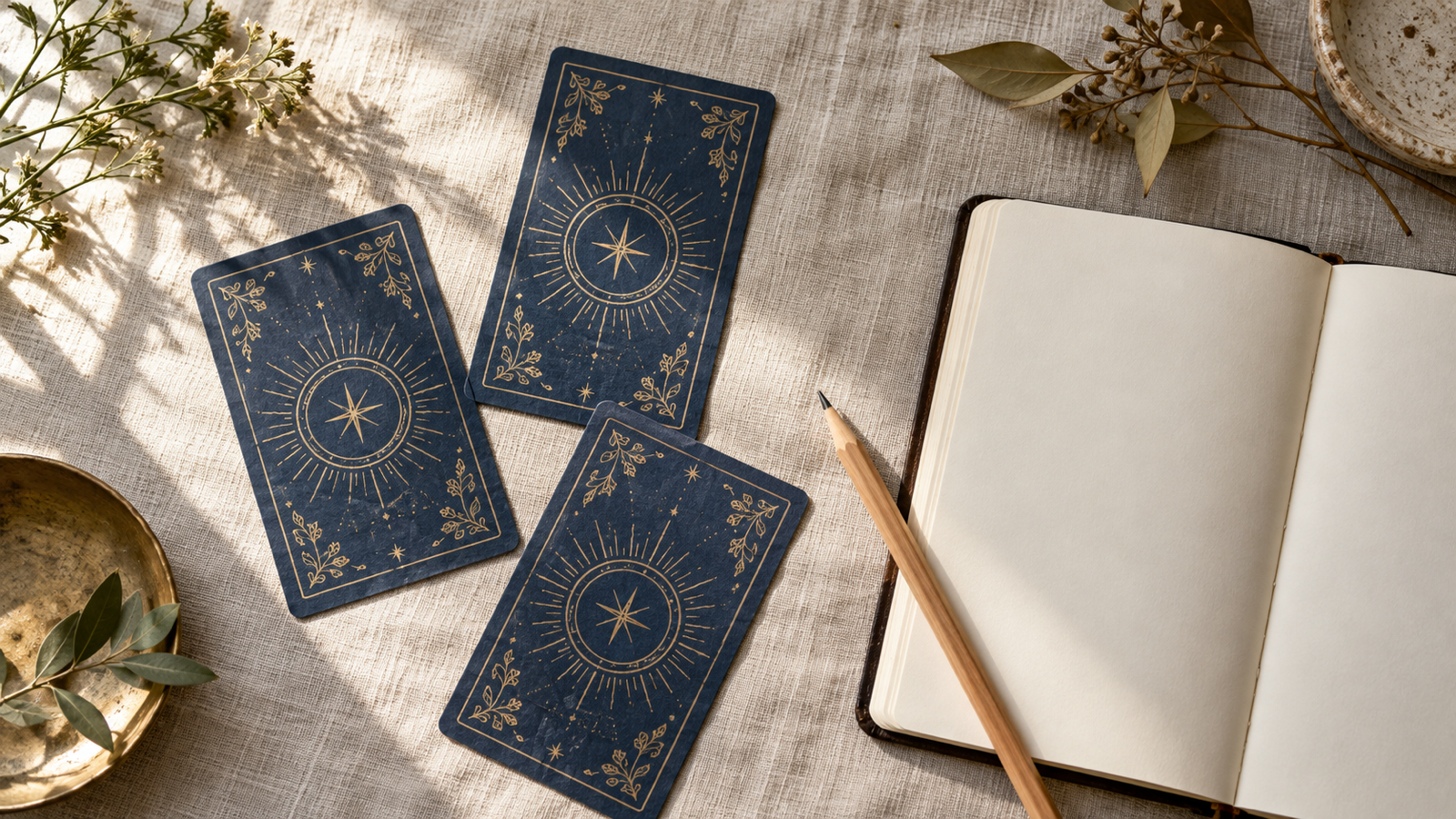
Write your reading as you go
Draw cards from a physical deck and enter their names and orientations. This tool does not draw cards or generate readings. Record your question, first impressions, interpretation and an action to try, then export them as a Markdown file.
Prepare before laying out your cards
Count your cards, check for missing cards and clear a space to lay them out. Decide whether to include reversals before drawing.
Your question for this reading
A specific time frame and situation make your interpretation easier to revisit. Write a question that helps you consider an action, such as “What should I focus on at work this week?”
Number of cards and position meanings
Each position has a role in the reading. Decide on those roles before drawing, and keep them consistent rather than changing them to suit a preferred answer.
One card
Observe one card's image and consider what it suggests about your question.
Your cards and their orientations
Lay out and record the cards in position order. If you do not know a card's name, describe an image that caught your eye. Select upright if you are not using reversals.
Your observations and interpretation
Write what you noticed first, then compare it with the meaning in your guidebook. Keep what you actually see separate from the interpretation you draw from it.
Interpretation checklist
The number of checked items is not a score for the reading's accuracy. Use these prompts to review what you wrote.
Export this reading as Markdown
Save your question, cards, interpretation and checklist in one file. If you have not entered anything, the download will contain the practice notes with the example shown above.
Help with keeping a reading journal
Drafts and downloaded records
Your draft is automatically saved in this browser's localStorage. If browser saving is unavailable, you can still keep writing while the page stays open. Exporting also saves your most recent 50 records in the browser. Clearing browser data removes drafts and records, so keep anything you want to retain as a Markdown file.
When you do not know a card's meaning
First record what you can see, such as the direction a figure faces, colors, tools or the background. Then check your deck's guidebook and consider how the meaning connects to your question and the card's position. Images and interpretations vary between decks.
Boundaries when reading for yourself or others
Do not keep drawing for the same question until you get the answer you want. Record the reading and give it time. Get consent before reading for someone else and stay within the scope they agreed to discuss. Do not press for information they do not want to share or make definite claims about their feelings or future.
Playing card suit correspondences for practice
This is one example of suit correspondences. Use numbered playing cards to practice reading Minor Arcana suits and numbers. This does not replace observing tarot images or practicing with the full Major Arcana.
| Playing cards | Tarot | Example themes |
|---|---|---|
| Hearts | Cups | Emotions and relationships |
| Diamonds | Pentacles | Work, money and the body |
| Clubs | Wands | Motivation and action |
| Spades | Swords | Thought and words |
Some approaches associate the Joker with the Fool, but correspondences vary by tradition.
Adding to a saved file
Open the .md file in a text editor. Under “Later reflection,” add the action you tried and what actually happened. For your next session, copy the file and change the date to keep the previous record.